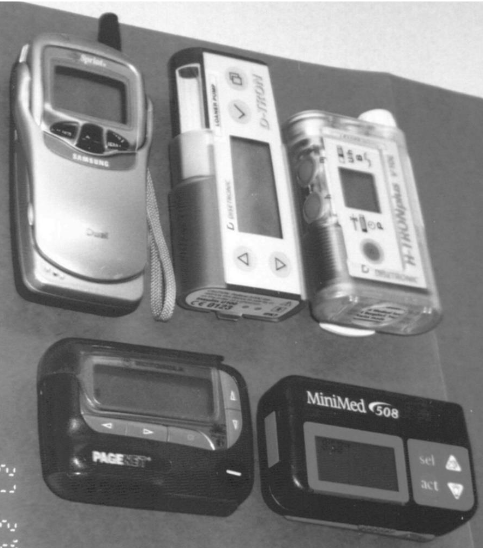
"What year is it?" - outraged memes when a pump looks like a pager
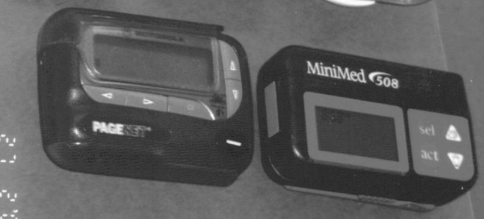
If you wear an insulin pump, you have definitely heard at least once: "Oh, is that a pager?". And every time you think: "What year is it? 1995?".
This is not an isolated annoyance. It happens all the time. Rentschler and Nothwehr devote an entire subsection to it. They show that the T1D community has developed its own ways of dealing with this absurdity. One of them is memes.
Robin Williams meme
One of the most popular memes in the English-speaking T1D community features actor Robin Williams from the film "Jumanji" (1995). In this scene, his character (Alan) escapes from a board game where he was trapped for 26 years. Confused, he asks two children and a suspicious police officer: "What year is it?".
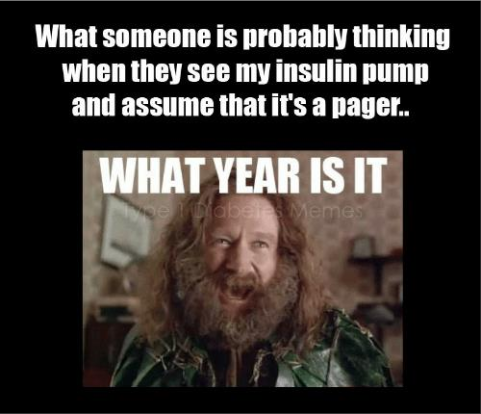
Caption: "What someone is probably thinking when they see my insulin pump".
Rentschler and Nothwehr read this meme as a "vernacular response" - a grassroots pushback against designers and marketing. Memes are not just funny pictures. They are criticism with teeth. "Memes about the misrecognition of insulin pumps as pagers populate type 1 diabetes meme sites, giving popular cultural form to a kind of response insulin pump wearers might use to disrupt the misrecognition of their device as a pager".
Why does it work?
The meme works on several levels. First, it is funny. Second, it builds a sense of belonging - "only diabetics will get it". Third, it exposes how misguided the design is. The pager is a dead technology. Using it as a design reference in the 21st century just shows how stuck in the past pump manufacturers are.
Rentschler and Nothwehr quote Raymond Williams, who wrote about "residue". The pager may be "formed in the past, but it is still active in the cultural process of the present". In other words, even obsolete technology lingers as a trace, a strange echo. And that echo fuels these memes.
I think this hits the mark. The pager has not fully disappeared. It survives as a form, a visual template that pump manufacturers stubbornly copy. And patients respond with irony, because frankly, what else are they supposed to do?
Humor as a survival strategy
Rentschler and Nothwehr point out that memes are not just entertainment. They help people cope with everyday awkward and humiliating moments. "The strange 'residue' of the pump/pager relationship might guide us to this presence of the past" - but it also shows that the T1D community can organize itself and speak in its own voice.
The article also notes that some pump users deliberately lean into the pager look to "pass" as if they were carrying a normal communication device. That only works if the other person has no clue what modern tech looks like. In 2026, a pager sparks curiosity, not indifference.
In my view, pump manufacturers should finally drop the pager aesthetic. A smartphone-like design makes far more sense. That said, it is not perfect either.
Thankfully, new designs are emerging - more on that in the next parts.