Abbott - Q2 2026 results. Libre is growing, but there are some nuances
There's no point pretending otherwise - Abbott's second-quarter 2026 results are mainly good news for investors. But from the perspective of those of us who use CGM systems, there's plenty worth discussing too. I checked the documents, listened to the earnings call and reviewed the reports. Here's what matters.
What actually changed?
Abbott published its results on July 16, 2026. And they are... reasonably solid. Total revenue came in at $12.59 billion, up 13 percent on a reported basis and 4.8 percent on a comparable basis. Adjusted earnings per share (EPS) were $1.31, beating analysts' expectations of $1.28.
So far, so good. The company also raised its full-year 2026 earnings guidance to $5.45-$5.60 per share (previously $5.38-$5.58).
There is one catch, though. GAAP earnings per share - meaning earnings calculated under standard accounting rules - came in at just $0.53. That's a huge difference. Why? Mainly because of costs related to the acquisition of Exact Sciences, which Abbott completed in March 2026.
That's mostly an issue for investors. For us, as Libre users, another number matters more.
How did Diabetes Care perform?
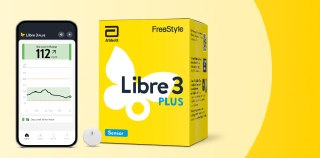
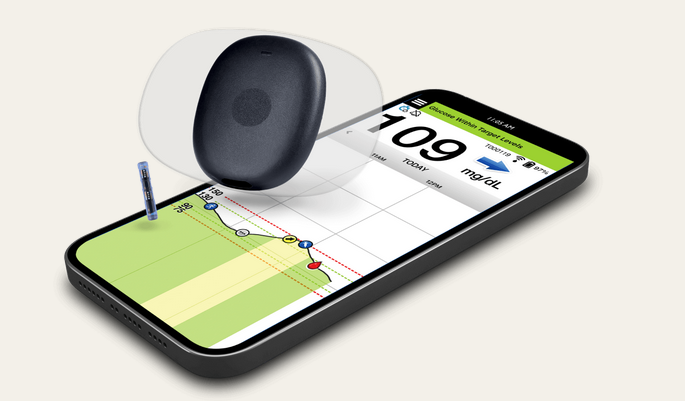
Here's the good news. The Diabetes Care segment - primarily FreeStyle Libre and Lingo - reported revenue growth of 11 percent to $2.19 billion. Sales of CGM systems alone increased 11 percent on a reported basis and 9.5 percent on a comparable basis.
What does that mean in practice? Libre is still growing. And for such a mature product, the pace is quite respectable. The CGM market has settled
at around 8-12 percent annual growth, with Abbott sitting somewhere in the lower half of that range.
For comparison, the entire Medical Devices segment grew 9 percent to $5.85 billion. Diabetes Care is growing faster than the segment average, which is a meaningful positive.
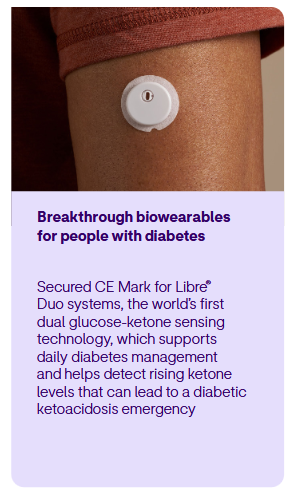
Libre Duo - the first glucose and ketone sensor
In May, Abbott announced that it had received the CE Mark for Libre Duo - the world's first biowearable capable of measuring glucose and ketones at the same time.
In my view, this is more interesting than the financial results themselves.
Libre Duo isn't another sensor with a marginally better MARD score. It brings a genuinely new capability. Detecting rising ketone levels - which can lead to diabetic ketoacidosis - could provide real safety benefits, especially for people with type 1 diabetes.
For now, the sensor has a CE Mark, so it should arrive in Europe soon. In the US, it is still awaiting FDA approval. What about Poland? Abbott has not yet announced a specific launch date for the Polish market. I'll keep following the story.
Diagnostics - acquisition-driven growth
This needs to be said clearly: the diagnostics numbers look impressive mainly because of the acquisition. Reported growth of 42.3 percent to $3.09 billion was driven by the Exact Sciences deal.
On a comparable basis, excluding the acquisition, growth was just 2.9 percent. That's far less impressive. Respiratory testing (COVID-19) continues to decline, down 8 percent on a comparable basis.
For us as CGM users, the takeaway is indirect: Abbott is clearly betting on diabetes care, while diagnostics is a separate story with very different growth drivers.
What about Nightscout, AndroidAPS and the rest?
Abbott doesn't mention open-source system integrations anywhere in its financial report. That's hardly surprising - investors are not the audience for that topic.
From our perspective, however, the key question is: will Libre 3 (and the new sensors) continue to work with xDrip+, Juggluco, AndroidAPS and Nightscout?
So far, there has been no official information about any changes in this area. Libre 3 works with the LibreLink app and - unofficially - with third-party systems through suitable bridges, such as a patched LibreLink app or a direct Bluetooth connection in the case of Juggluco.
Will Libre Duo offer similar compatibility? At this point, nobody knows. It's a new product, and the open-source community usually needs a few months to figure out how to read the signal from a new sensor. I'll keep an eye on it.
What about Android and iPhone?
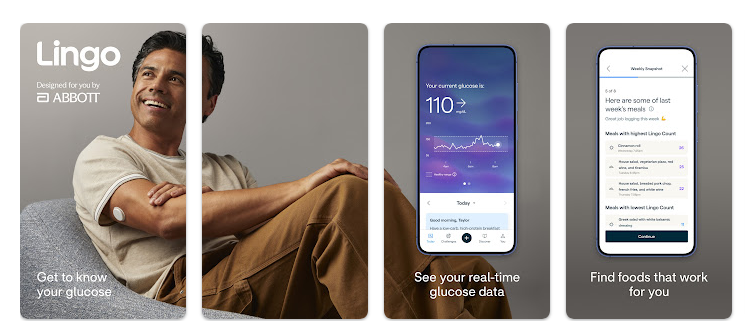
No changes here. LibreLink works on both Android and iOS. Lingo - the app for people without diabetes who want to monitor their glucose levels - is also available on both platforms.
There has been no new information about restrictions or changes to data access policies.
What does this mean for users?
Putting the numbers into everyday terms:
Libre remains the CGM market leader. Quarterly revenue of $2.19 billion is too large to ignore. Abbott has the resources to keep developing the platform and defending its position.
Libre Duo is the first genuinely meaningful step forward in years. Instead of another sensor marketed around "improved accuracy," it adds a new function. Real-time ketone tracking could materially improve safety.
Prices are unlikely to fall. Abbott is raising its earnings guidance, while the CGM market has settled into 8-12 percent growth. There is competition from Dexcom, but not enough to force Abbott into price cuts. At least not yet.
Reimbursement in Poland? Unfortunately, nothing new here. Abbott doesn't discuss the Polish market in its financial reports. Libre 3 is reimbursed, but Libre Duo will need a decision from the Ministry of Health first. That could take time.
Summary - do these results matter to Libre users?
Yes, but indirectly.
Abbott is in strong financial shape. That means:
it has the resources to invest in new products, with Libre Duo likely to be just the beginning,
a sudden retreat from the CGM market looks highly unlikely,
its competitors are facing a financially strong rival.
For users, though, three things matter most: price, availability and compatibility. The financial results don't change any of them today. Libre Duo in Poland? Still waiting. Open-source integrations? Still waiting.
It's also worth remembering that Abbott's GAAP profit fell from $1.779 billion a year ago to $928 million this quarter. That's mainly the result of costs tied to the Exact Sciences acquisition (I'll write about what the company does another time). Abbott is spending heavily on expansion. Will that affect sensor prices? Probably not - the CGM market is too competitive for aggressive price increases. But I wouldn't expect meaningful price cuts either.
I'll continue tracking Abbott and analyzing the next updates from the company.
Sources: