Where did the money come from? Dexcom points to two main sources. The United States is still its largest market, with revenue up 15% year over year. The real growth engine, however, appears to be international expansion. International revenue rose 18% in Q4 2025. Compared with 2015, when Dexcom's international revenue was around $50 million and it had about 30,000 active users, today's numbers are on an entirely different scale.
Interestingly: The company is beating its own forecasts. In January 2026, it raised its full-year expectations, and the final result of $4.662 billion came in better than planned.
How does Dexcom plan to keep growing? The 2030 plan and new products
At Investor Day 2026, the company presented its long-term strategy. It assumes maintaining 12% year-over-year revenue growth through 2030 - and that is only the "base case", as the company emphasizes in its presentation. A key part of that strategy is a decisive push into the type 2 diabetes market.
Which specific products is Dexcom investing in to achieve this?
Stelo: This is the first over-the-counter (OTC) glucose biosensor in the United States. It costs $99 for a pack of two sensors, or $89 with a monthly subscription. It is aimed at people with type 2 diabetes who do not use insulin. It generates lower revenue per user, but it opens a huge new market for the company.
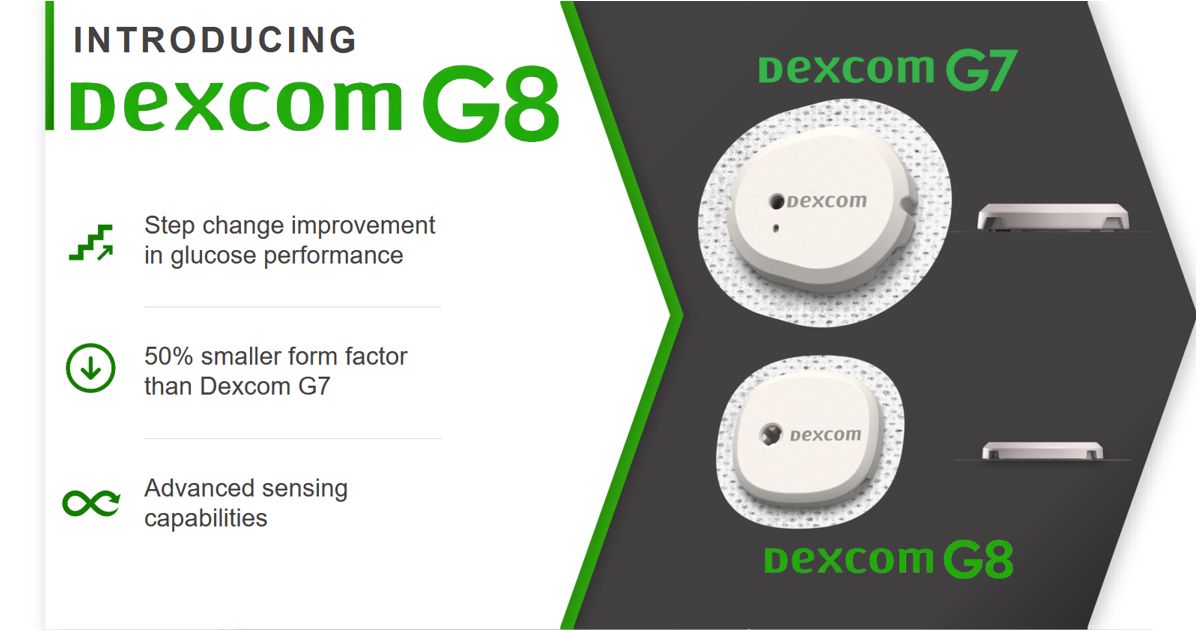
G8: Dexcom G8, expected to launch around late 2027 or early 2028, is supposed to be up to half the size of the G7 and - crucially from a financial perspective - much cheaper to manufacture.
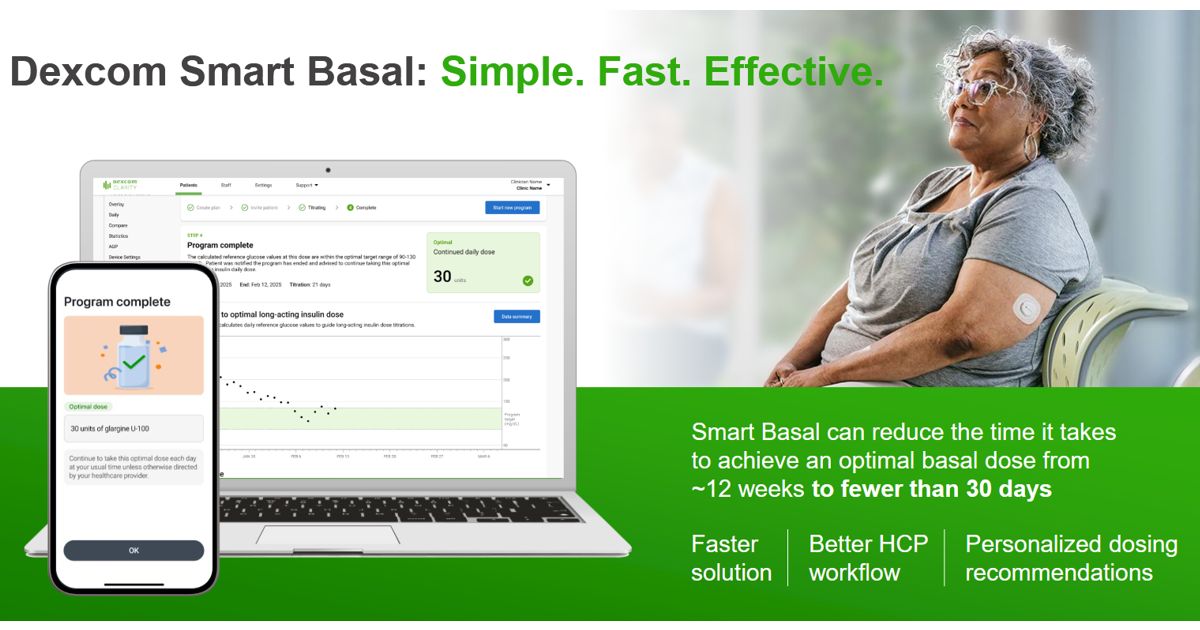
Smart Basal: This is a basal insulin dosing optimizer integrated with CGM, designed for patients with type 2 diabetes. It received FDA clearance in 2025. Launching these type 2 diabetes innovations is meant to be one of the company's main growth drivers.
Profitability: fat margins, but there is a catch
Revenue alone does not tell the whole story. Dexcom boasts that it is a "durable, double-digit revenue and cash flow growth company". And the margins really are impressive. For 2026, the company forecasts a non-GAAP gross profit margin of 63-64% and a non-GAAP operating margin of 22-23%.
That means that out of every dollar of revenue, the company keeps more than 60 cents after direct product manufacturing costs. It shows just how profitable this business is - and how much pressure Dexcom faces to preserve those margins.
The catch for patients is obvious: Dexcom can achieve such high margins because its products are expensive. Most of the money comes from health insurance systems, such as Medicare, that pay for them. If reimbursement suddenly disappeared, Dexcom's entire business model would be thrown into doubt. That is why expanding "covered lives", meaning people whose devices are reimbursed, is so critical for Dexcom investors.
Hidden costs: huge legal spending in the fight with Abbott
Dexcom's financial report also contains entries that say a lot about the CGM market. The company is locked in a fierce patent dispute with Abbott, the maker of FreeStyle Libre. In 2025, spending on patent litigation, including the Abbott case, was "only" $0.4 million. Just a year earlier, in 2024, it reached as much as $86.7 million.
That is a massive amount of money. These figures show that the fight for dominance in CGM is not just happening in doctors' offices and pharmacies. A large part of it is playing out in court. In the end, patients may pay indirectly through slower innovation or higher prices.
How much does Dexcom really cost? Prices in the United States and Poland
Let's consider how these huge corporate numbers translate into patient reality. How much does it cost to use Dexcom G7 in Poland? A full-price sensor works for 10 days and costs PLN 250. The monthly cost for three sensors is around PLN 750. With NFZ reimbursement, where 70% is covered, the patient's co-payment starts at around PLN 75 per sensor, or about PLN 225 per month for three sensors.
Now compare that with prices in the United States. Dexcom G7 without insurance costs around $350-400 per month (~PLN 350-400? No, those are dollars, which means as much as PLN 1,400-1,600 per month). For an American patient without good insurance, that means roughly $4,200-4,800 per year. In the United States, assistance programs can bring that amount down to around $75 per month.
And Stelo? The over-the-counter system costs $99 for two sensors (30 days) or $89 with a monthly subscription. It is a clearly cheaper option, aimed at less affluent patients with type 2 diabetes.
Let's put the data in one place to show the scale of the differences more clearly.
Table 1. CGM cost comparison - Dexcom in Poland and the United States (2026 data)
Device / Option | Poland (patient price) | United States (patient price) |
|---|---|---|
Dexcom G7 (full price) | PLN 750 / month (3 sensors) | ~$350-400 / month (~PLN 1,400-1,600) |
Dexcom G7 (with reimbursement / insurance) | from ~PLN 75 / sensor (70% NFZ coverage) | from ~$75 / month (with assistance programs) |
Dexcom Stelo (over the counter) | (no official distribution in Poland) | ~$89-99 / month (2 sensors / 30 days) |
A huge market: diabetes costs America more than $400 billion a year
Dexcom does not operate in a vacuum. The entire CGM business is fueled by enormous spending on diabetes care. In the United States, the total annual cost of diabetes is about $412 billion, including $307 billion in direct medical costs and $106 billion in indirect costs, such as lost productivity.
For an individual patient in the United States, that means average annual spending of around $19,736, of which about $12,022 is directly related to diabetes itself. Dexcom and other CGM companies are trying to capture as large a share of that money as possible, arguing that their devices help prevent far more expensive complications.
For comparison, the data from Poland is also alarming: the NFZ spends about PLN 4.5 billion a year on diabetes treatment and complications, and treating one patient with diabetes is 82.5% more expensive than treating a person without the disease. The nursing benefit for people with diabetes is PLN 215.84 per month.
Dexcom's wallet: cash for lawsuits and share buybacks
At the end of 2025, Dexcom had a huge cash position. The company announced a $1 billion share buyback program for 2026. That tells the market that the company believes its shares are undervalued, but it also represents a massive pool of capital that, in the view of some critics, could be used to lower prices for patients or increase investment in research and development.
The company plans to allocate at least 50% of annual free cash flow to share buybacks over the long term. The message is clear: Dexcom is focused on increasing shareholder value.
Is Dexcom a company for patients or for investors?
Looking at the financial analysis, I see Dexcom as an extremely well-run company, with a clear strategy and impressive results. For an investor, it is almost a dream stock - double-digit growth, fat margins, an aggressive buyback plan, and a promising product pipeline. Management knows what it is doing. They have a plan to capture the type 2 diabetes market and the cash to execute it.
But I am a patient, not an investor. And from that perspective, all these numbers make me uneasy.
Is the fight for "covered lives" about patients or money? Dexcom speaks enthusiastically about expanding access to CGM through "access expansion". That sounds good. In practice, it means getting as many health insurance systems as possible, such as Medicare, to agree to pay for the product. The goal is not to lower the price for patients, but to find someone else to pay it.
Where is the cheaper version? In the presentation, the company praises the future G8, which will be "lower cost to make". Great. But will those savings ever reach patients' pockets? Dexcom has no real pressure to lower prices. In the premium segment (G7), there is no meaningful price competition, and in the lower-priced segment (Stelo), Dexcom itself set the price at $99. Dexcom knows that for someone who needs CGM, there is often no alternative. They either pay or go without.
Record profits versus patient reality in Poland. In 2025, Dexcom earned more than $800 million in net income. That is enough capital to buy back $1 billion worth of shares. At the same time, a Polish patient pays PLN 250 for a sensor, or PLN 75 with 70% reimbursement, which is still limited. The nursing benefit for a person with diabetes in Poland is just over PLN 200. That is often less than the monthly cost of sensors even with reimbursement, never mind insulin, pumps, and other expenses.
My opinion: Dexcom is a financial machine that runs almost perfectly. Its effectiveness is hard to deny. But as patients, we should not be blinded by excellent stock-market results. For now, shareholders are the ones enjoying most of the benefits. Patients do get access, yes, but often to a very expensive product that someone else has to pay for. The real test for Dexcom in the coming years will not be another record quarter. It will be whether, after building a powerful market position and generating enormous profits, the company decides to genuinely lower prices or significantly improve access for those who cannot afford it.
Source: Dexcom Investor Day 2026 presentation (May 2026)