Nightscout 15.0.8 - what's new in the "Chocolate Chip Muffin" release
Nightscout 15.0.8 focuses on security, compatibility with AID systems, and database cleanup. You will not find major new interface features here, but you will find changes that can protect your data from duplicates or accidental deletion. In this article, I cover the most important updates and explain what they mean in practice for people who use Nightscout every day.
What changed in 15.0.8?
Nightscout 15.0.8 (codename "Chocolate Chip Muffin") is primarily a maintenance release. The official changelog lists new administration tools, connector updates, report fixes, and several security and dependency improvements.
These changes matter because Nightscout remains a key part of remote glucose monitoring for many people using CGMs, insulin pumps, and closed-loop systems. In my view, improvements to data reliability and AID compatibility are more valuable than another cosmetic interface feature.
New database cleanup tools
One of the most practical additions is the ability to delete records from a selected date range directly from Admin Tools. This applies to records in the entries, treatments and devicestatus collections.
If your database contains an old period with incorrect or duplicated records, or you want to remove test data, you no longer need to use the MongoDB console. You can do it from the administration panel. The tool first shows a preview of what will be deleted, reducing the risk of accidentally removing a large part of your history.
Support for trimming profiles has also been added, together with database indexes intended to speed up the process.
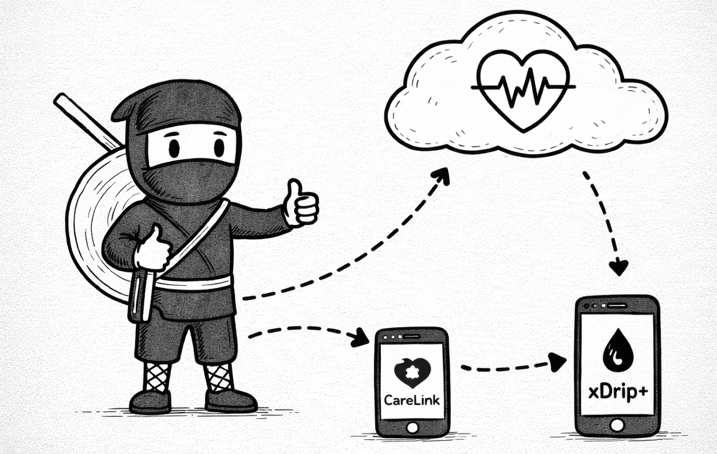
Better compatibility with Dexcom, Glooko and LibreLinkUp
Version 15.0.8 updates nightscout-connect to 0.0.13. This library is responsible for connecting Nightscout to external data sources.
The most important change affects Dexcom Share users. It is a fairly technical change, and you can read the details in the box below.
The existing
BRIDGE_*configuration is now mapped to the new Connect implementation by default. If you want to keep using the oldshare2nightscout-bridgefor any reason, you must explicitly setDEXCOM_BRIDGE_USE_LEGACY=true.
Glooko Connect now supports regional hosts, browser-based authentication, and an optional fallback to the v3 API graph. LibreLinkUp has gained additional options for overriding regions and client versions.
What about AID systems?
Support for UUIDs and identifiers used by AID clients was a major focus of version 15.0.7. Version 15.0.8 continues this work with smaller maintenance changes.
The default UUID_HANDLING=true behavior introduced in 15.0.7 remains in place. If you use Loop, Trio, AAPS, or iAPS, records with UUIDs are stored without duplicates and remain accessible through their original identifiers.
The new version also fixes the rendering of temporary AAPS basals. Nightscout 15.0.8 now displays them in greater detail, which can be useful when analyzing loop behavior.
Security and stability
The security layer received several concrete improvements.
User-provided text is now consistently sanitized across all write paths: API v1, API v3, and WebSocket. This reduces the risk of unintended code being passed through Nightscout to other applications that use the same data.
Report and chart fixes
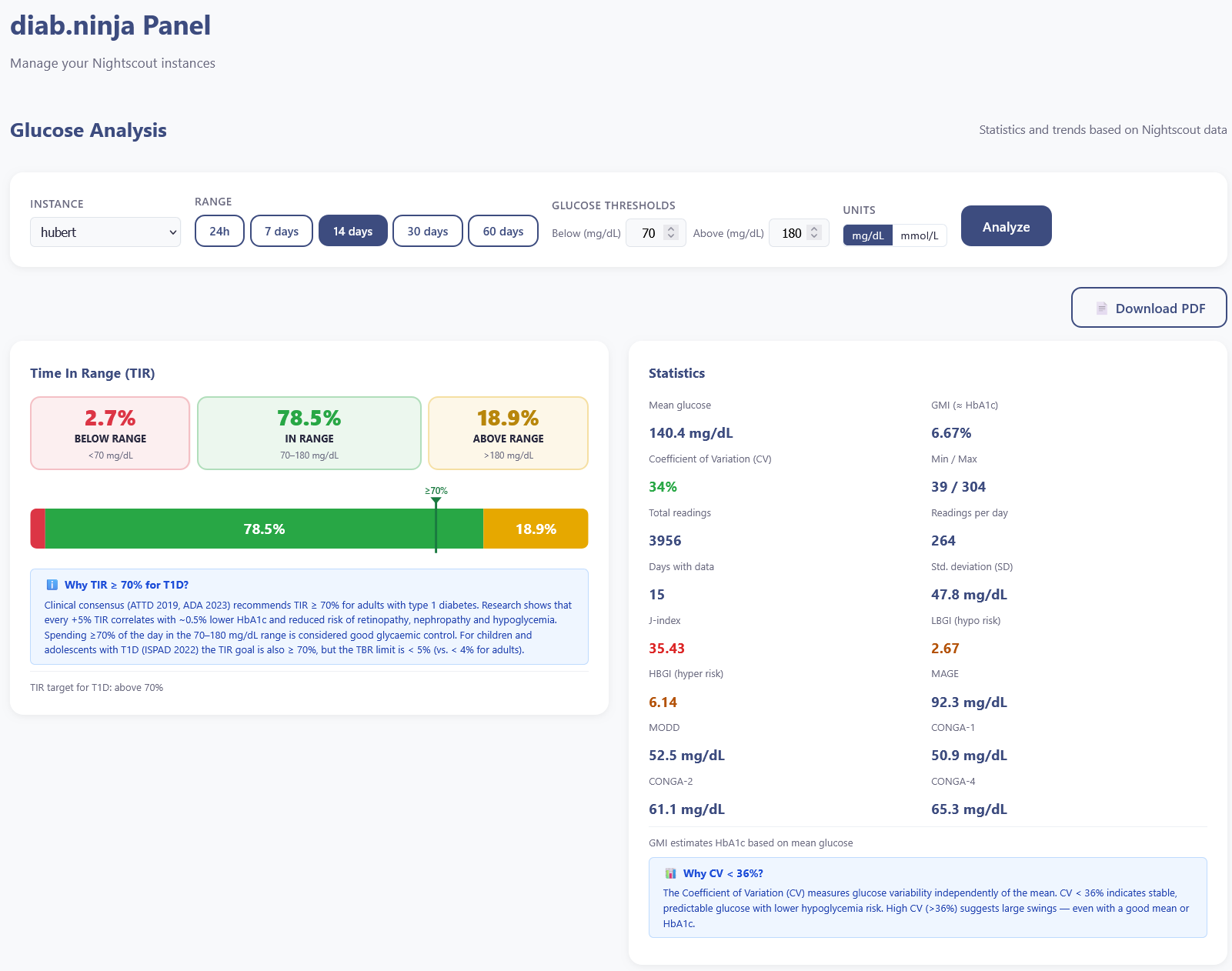
People who analyze their data in Nightscout will benefit from several fixes. I described the entire Nightscout reporting module here.
The Glucose Distribution report now includes GMI and Revised GMI metrics. OpenAPS prediction lines, trend indicators, mmol/L unit handling, and day boundaries in reports have also been fixed for time zones with half-hour and quarter-hour offsets.
A bug was also fixed where Bolus Wizard Preview could silence a high glucose alarm even when there was no insulin on board.
In Nightscout 15.0.8, the estimated A1c in the Daily stats report is incorrect when glucose is displayed in mg/dL (for example, it may show 95.8% instead of 6.9%). The issue will be fixed in the next release. The value in mmol/L is correct.
How to update Nightscout
If you use diab.ninja, you can change the version from the management panel. There is no need to modify the environment or MongoDB manually.
After the update, I recommend checking whether:
the Dexcom connector is still sending data,
reports show the correct day boundaries for your time zone,
AID records are not duplicated in
treatments.
Common problems
Loop records appear twice
Check:
whether
UUID_HANDLINGis set totrue(the default),whether the database contains older records with UUIDs in the
_idfield from before version 15.0.7.
If the duplicates affect historical data only, the new date-range cleanup tool lets you remove them without changing the rest of the database.
What about diab.ninja?
diab.ninja provides Nightscout as a hosted service. Version 15.0.8 is already available for selection in the user panel, so you do not need to update Node.js, MongoDB, or Docker yourself.